


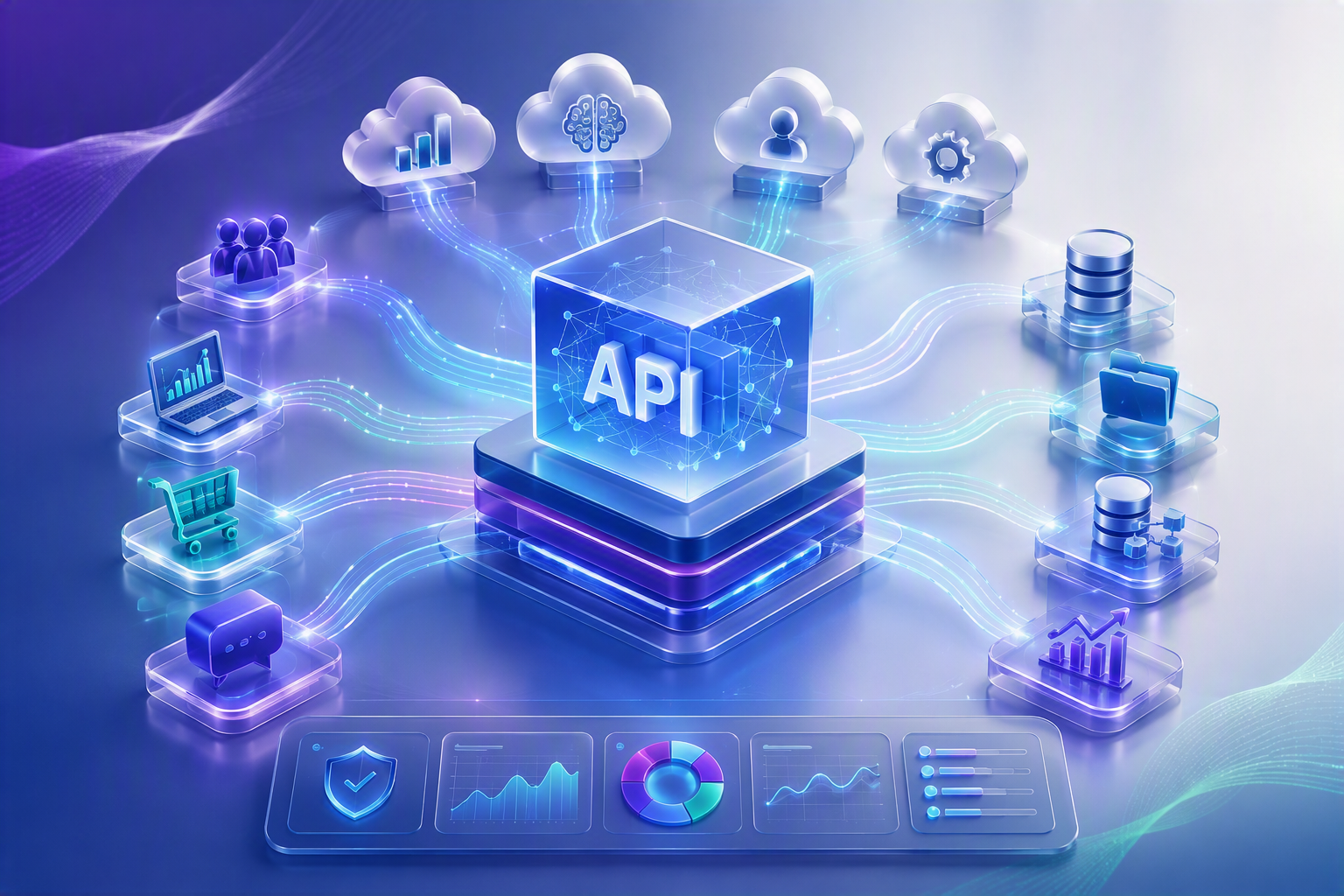
APIs connect everything in modern business — Microsoft 365, Azure, AWS, SaaS platforms, AI services, and business applications all rely on them. But many organizations struggle to maintain a complete picture of which APIs they operate, who can access them, and how they are being used. This visibility gap creates serious security and operational risks.
Traditional security tools weren’t designed for API environments. They protect the perimeter, but can’t monitor what flows through APIs or enforce consistent access controls. That’s where API management platforms come in — they provide centralized visibility and control over how applications communicate.
What API Management Does
An API management platform handles authentication, authorization, rate limiting, monitoring, analytics, and lifecycle management. It’s the difference between hundreds of uncontrolled integrations and a secure, governed architecture.
Think of it as: Who can access? What data flows? Is it working? Is it safe?
Key Risks Organizations Face
- Unauthorized Access — Compromised credentials or overly permissive policies allow attackers to access sensitive systems and data through APIs.
- API Vulnerabilities and Data Exposure — Unpatched APIs or poor input validation expose sensitive information to attackers.
- Unmanaged Traffic — Excessive or malicious API traffic can overwhelm systems or mask actual attacks.
- Limited Visibility — Without monitoring, organizations can’t detect compromise or enforce policies.
- Loss of Lifecycle Control — Unpatched, orphaned, or undocumented APIs continue running long after they should be retired, creating ongoing risk.
Leading API Management Platforms
- Tyk combines an API gateway with authentication, rate limiting, analytics, versioning, and developer portals. It supports REST, GraphQL, and gRPC. It’s attractive to mid-market organizations looking for flexibility and straightforward deployment.
- WSO2 provides API design, gateway management, lifecycle management, analytics, and access management. It supports REST, GraphQL, WebSocket, and Webhooks. Strong for organizations with complex, heterogeneous API environments.
- Gravitee extends management into GraphQL, gRPC, and event-driven architectures. It appeals to organizations with modern, microservices-based deployments.
Each platform reflects different architectural philosophies and organizational needs.
API Management Across Your Enterprise
- Cloud Applications — Connect workloads and services across Azure, AWS, and GCP.
- SaaS Platforms — Link Salesforce, ServiceNow, Slack, and other SaaS with internal systems.
- AI Applications — Secure APIs used by AI assistants, chatbots, and automation. AI applications often have elevated data access, making API security critical.
- Microsoft 365 — Connect Teams, SharePoint, Exchange, and Power Platform with business applications.
- Business Applications — Integrate CRM, ERP, finance, and customer service systems.
- Partner Integrations — Safely expose APIs to partners while protecting sensitive data.
Why Platform Choice Matters
Small and mid-sized organizations often benefit from Tyk or WSO2 for their flexibility and cost efficiency, while larger enterprises may prefer WSO2 for its broad feature set or Gravitee for its modern, scalable architecture. Organizations integrating AI should prioritize platforms that can securely manage AI-related APIs, monitor data flows, and enforce governance policies. Ultimately, the best choice depends on your deployment model, integration needs, security requirements, and risk profile.
Beyond Technology: Governance Is Essential
Technology alone doesn’t secure API environments. Effective API management requires governance.
- Security Policies — Define what data flows through APIs, who can access them, and credential validity periods.
- Access Controls — Enforce least-privilege principles. Applications should access only what they need.
- Monitoring and Alerting — Review API activity regularly. Investigate unusual patterns or suspicious access.
- Lifecycle Processes — Establish clear procedures for API development, deployment, versioning, and retirement.
Experienced teams help configure controls, identify risks, monitor activity, and adapt governance as needs evolve.
The Business Value of API Management
- Better Security — Apply consistent controls across all APIs and reduce the attack surface.
- Greater Visibility — Understand what APIs are running, who’s using them, and whether they’re working.
- Improved Integration — Connect cloud, SaaS, and AI applications more efficiently.
- Better Scalability — Support increasing API traffic without performance degradation.
- Stronger Governance — Establish consistent policies and reduce compliance risk.
Getting Started
If your organization is expanding API usage through cloud adoption, SaaS integrations, AI applications, or business initiatives:
- Audit existing APIs — Understand current integrations.
- Define requirements — Identify security, performance, and governance needs.
- Evaluate platforms — Test Tyk, WSO2, or Gravitee against your requirements.
- Plan deployment — Decide on a centralized or federated approach.
- Establish governance — Create policies and monitoring processes.
- Enable teams — Train teams on the platform and governance model.
- Monitor and evolve — Continuously review and adapt as needs change.
The Path Forward
APIs are essential to modern digital businesses, connecting cloud, SaaS, AI, and automation across the enterprise. Effective API management combines security, visibility, governance, and monitoring to reduce risks, improve reliability, and support growth. The goal is simple: keep every digital connection secure, visible, controlled, and aligned with business needs.