


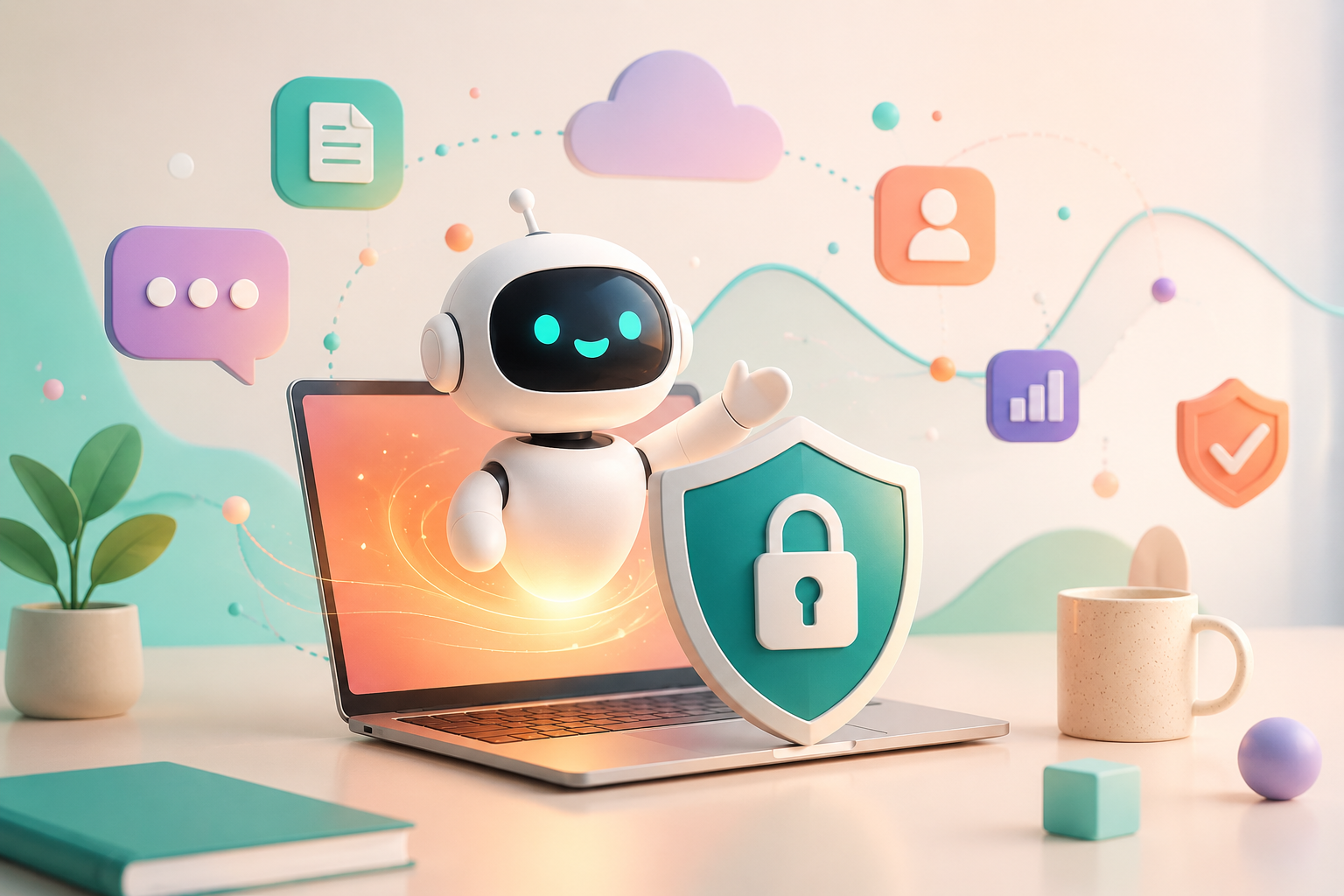
As businesses adopt AI assistants, chatbots, copilots, and generative AI applications, they are finding new ways to automate work and improve productivity. But AI also introduces new security risks.
AI applications may have access to company documents, customer information, and business systems. Attackers can attempt to manipulate them through prompt injection, jailbreaks, or attempts to expose sensitive information. This is where AI Security Posture Management (AISPM) can help. It gives organizations greater visibility and control over the security risks surrounding AI applications.
The New Security Challenge With AI
Traditional security controls such as endpoint protection, identity management, firewalls, and SIEM remain important. However, they don’t address every risk created by AI interactions.
For example, an employee may enter confidential information into an unapproved AI tool, or an attacker may try to manipulate a chatbot into revealing restricted information. AISPM adds another layer by helping organizations monitor AI activity, identify suspicious interactions, protect sensitive data, and enforce security policies.
The Growing AI Security Landscape
Several platforms are emerging to address these new challenges.
- Lakera Guard helps protect AI applications against prompt injection, jailbreak attempts, sensitive data exposure, and unsafe interactions.
- Protect AI focuses on AI and machine-learning security, including model security, AI supply-chain risks, and security testing.
- CalypsoAI focuses on enterprise AI security and governance, helping organizations monitor AI usage, apply policies, and protect sensitive information.
These platforms represent different approaches to AI security and reflect the growing need for security controls designed specifically for AI applications.
Risks Organizations Need to Watch
- Prompt Injection: Detect attempts to manipulate AI systems through crafted instructions.
- Jailbreaking: Identify attempts to bypass an AI model’s intended safeguards.
- Data Leakage: Reduce the risk of sensitive business or customer information being exposed.
- AI Monitoring: Improve visibility into how AI applications are being used.
- Policy Violations: Apply rules around approved AI tools and data usage.
AI Security Across the Enterprise
- Customer Chatbots: Protect public-facing AI applications from malicious interactions.
- Internal AI Assistants: Secure AI tools connected to company documents and business information.
- AI-Powered Applications: Protect AI used for customer service, automation, and business processes.
- AI Agents: Monitor AI systems that can access applications or perform business actions.
- AI Governance: Establish clear policies for secure and responsible AI adoption.
Beyond Technology: The Human Factor
An AI security platform is only one part of the solution. AI applications and attack techniques continue to change, so organizations need regular monitoring, security testing, policy reviews, and investigation of unusual activity.
Experienced security professionals help review alerts, adjust policies, investigate suspicious behaviour, and keep security controls aligned with how the organization actually uses AI.
The Business Value of AI Security
- Lower AI Risk: Identify threats specific to AI applications.
- Better Data Protection: Reduce the risk of confidential information exposure.
- Greater Visibility: Understand where and how AI is being used.
- Stronger Governance: Establish clearer controls around AI adoption.
- Safer AI Adoption: Use AI while maintaining appropriate security oversight.
AI is becoming part of everyday business operations. Platforms such as Lakera Guard, Protect AI, and CalypsoAI can help organizations address the security challenges that come with AI adoption. But tools alone aren’t enough.
Effective AI security combines the right technology, clear policies, continuous monitoring, and experienced security oversight. When these elements work together, organizations can reduce risk while continuing to take advantage of AI’s potential.
For businesses planning to expand their use of AI, building security into the adoption process from the beginning can make it easier to scale AI confidently, protect sensitive information, and maintain better control over how these technologies are used.
The goal isn’t to slow AI adoption down. It’s to make sure innovation grows with the right security around it.